
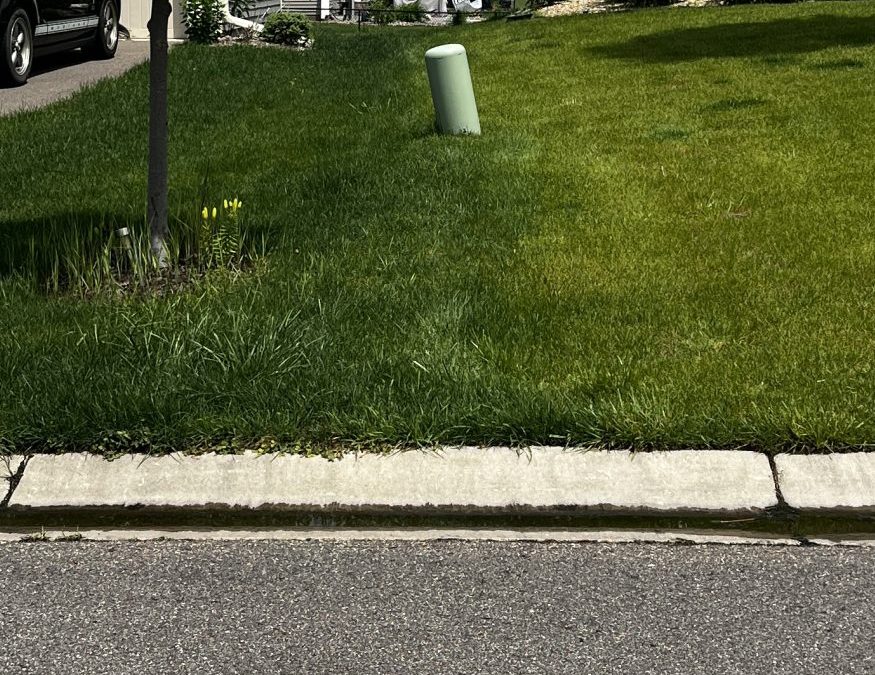
Is It Too Late to Fertilize My Lawn? The Science Behind Fall Fertilization and Spring Green Up
As temperatures cool and leaves begin to fall, many homeowners in Minnesota and Wisconsin wonder, “Is it too late to fertilize my lawn?”
While your lawn might not appear to be growing much in the fall, there is a lot happening inside the grass plant and beneath the soil. In fact, fall is one of the most important times of year for your lawn. Grass plants are preparing for winter by growing roots, absorbing nutrients, and storing energy that will help them survive the cold months ahead.
What many homeowners don’t realize is that the work your grass does during fall has a direct impact on how healthy and green your lawn looks the following spring.
Understanding the science behind this process helps explain why fall fertilization is such an important part of a healthy lawn care program.
What Happens to Your Lawn During Fall?
Most lawns in Minnesota and Wisconsin contain cool season grasses, including Kentucky bluegrass, perennial ryegrass, and fine fescue. These grasses grow best when temperatures are cooler, which is why lawns typically grow most actively during spring and fall. But something especially important happens as winter approaches.
The grass plant begins preparing for the months ahead by developing roots and building up energy reserves.
Throughout the growing season, grass uses sunlight to produce carbohydrates through photosynthesis. These carbohydrates provide the energy needed for growth and survival. During fall, grass can accumulate carbohydrates in its crowns, roots, and other storage tissues. These reserves become particularly important when cold weather slows photosynthesis and growth.
Think of it like preparing for a long trip.
Your grass is packing the nutrients and energy it will need to make it through winter and get growing again in spring.
Fall fertilization supports this natural process by providing nutrients while the grass is still able to absorb and use them.
Why Fall Fertilization Is So Important
Fertilizer provides essential nutrients that grass plants need for growth and development.
One of the most important nutrients is nitrogen. Nitrogen plays a critical role in photosynthesis, protein production, root development, and overall plant health.
During the active fall growing period, an appropriately timed nitrogen application can help grass:
- Recover from summer heat and drought stress.
- Support healthy root and leaf growth.
- Maintain a thick, dense lawn.
- Produce and accumulate energy reserves.
- Enter winter in a healthier condition.
The objective isn’t simply to make the lawn look greener before winter. It’s to support the natural processes that prepare the grass for winter and the growing season ahead.
This is one reason fall fertilization is often considered more valuable than applying extra fertilizer at other times of the year.
Dormant Grass Is Not Dead Grass
One of the biggest misconceptions about lawns is that the grass dies during winter and starts growing again in spring. That isn’t what happens.
When grass enters winter dormancy, its growth and metabolic activity slow dramatically. The grass is conserving energy until growing conditions improve.
Although the blades may turn brown and growth becomes nearly impossible to notice, the grass plant’s crown and living tissues remain alive.
Throughout winter, the grass relies on stored energy to maintain essential cellular functions. The plant’s ability to survive depends on several factors, including temperature, snow cover, moisture, disease pressure, and its overall health entering winter.
A lawn that goes into winter healthy and with adequate energy reserves is better prepared to withstand these stresses.
This is another reason fall fertilization matters. Proper nutrition helps support the health of the grass before it enters dormancy.
The Science Behind Spring Green Up
Have you ever noticed that some lawns green up quickly in spring while others take several additional weeks?
There are several reasons for this, including grass species, sunlight, soil temperature, and the lawn’s condition entering winter. But one particularly important factor is what happened the previous fall.
When spring arrives and temperatures begin warming, the grass plant starts growing again. However, there’s a challenge. The grass needs energy and nutrients to begin growing, but the soil is still cold.
Cold soil temperatures mean the microorganisms responsible for breaking down organic matter and releasing nutrients are relatively inactive.
The grass plant’s root system is also gradually becoming more active as the soil warms.
So where does the grass get what it needs to start growing? From the energy and nutrients it stored during the previous growing season.
Stored carbohydrates help fuel the development of new leaves and roots. Nutrients retained within the plant also support early growth.
As temperatures continue rising, photosynthesis increases, root growth becomes more active, and soil biology begins releasing additional nutrients.
This is when the lawn transitions from relying heavily on stored reserves to supporting its growth through active photosynthesis and nutrient uptake.
A lawn that entered winter healthy and with adequate reserves has a stronger foundation for spring green up.
This is why fall fertilization can influence how your lawn looks months after the fertilizer was applied.
What Type of Fertilizer Is Best in the Fall?
For many years, fall fertilizers were marketed primarily around their potassium content. Potassium is an essential nutrient that helps regulate water movement within plant cells and contributes to the grass plant’s ability to tolerate environmental stresses, including cold temperatures.
Historically, turfgrass scientists emphasized potassium’s role in regulating dissolved substances within cells, which can contribute to freezing tolerance. This led to the common recommendation of applying fertilizers high in potassium before winter.
However, research has helped refine our understanding.
While potassium is important, applying additional potassium does not necessarily improve winter hardiness when the soil already contains adequate potassium. At bioLawn, we commonly find that soils in our Minnesota and Wisconsin service areas already contain sufficient potassium. As a result, adding more potassium simply because winter is approaching often provides little additional benefit.
Instead, nitrogen is often the nutrient that deserves the greatest attention during fall fertilization.
Nitrogen supports the growth and physiological processes that help the plant prepare for winter.
The source of nitrogen also matters. Quick release nitrogen becomes available to grass relatively rapidly, which can be especially useful during cooler fall weather when the biological activity responsible for releasing nutrients from some slow release fertilizers declines.
The key is applying an appropriate amount of available nitrogen while the grass is still actively growing.
The best fall fertilizer isn’t necessarily the one with the highest potassium content or the most nitrogen. It’s the fertilizer that provides the nutrients your lawn actually needs, at the time it can use them.
What Happens If You Skip Fall Fertilization?
Skipping one fall fertilizer treatment doesn’t mean your lawn will die or struggle the following spring. Healthy grass can survive winter without a late season fertilizer application, particularly when soil nutrients are already sufficient.
However, lawns that receive inadequate nutrition over time may struggle to maintain healthy growth and density. They may also be less capable of recovering from summer stress and other environmental challenges.
Fall fertilization is an opportunity to support the grass when temperatures are naturally favorable for growth and recovery.
And because those benefits carry into the following spring, missing fall fertilization can mean missing an important opportunity to support next year’s lawn.
Environmentally Responsible Fall Fertilization
At bioLawn, our approach to lawn care begins with understanding how grass naturally grows.
Rather than applying fertilizer simply because the calendar says it’s time, we focus on providing nutrients that support the plant’s needs throughout the growing season.
That includes recognizing the importance of nitrogen during fall, understanding when nutrients are available to the grass, and avoiding unnecessary applications of nutrients such as potassium when soils already contain adequate levels.
Applying the right nutrients at the right time helps produce healthy grass while reducing unnecessary fertilizer use and the potential for nutrient losses.
A healthy, dense lawn also helps limit opportunities for weeds to establish, reducing the need for additional corrective treatments.
Good lawn care isn’t about applying more fertilizer. It’s about helping the grass use the nutrients it needs as efficiently as possible.
The Bottom Line: Is It Too Late to Fertilize Your Lawn?
Fall fertilization is about much more than keeping your grass green a little longer. It’s about understanding what happens inside the grass plant as it prepares for winter.
During fall, grass develops roots, produces and stores energy, and prepares for months of limited growth. When spring arrives, those stored reserves help the grass begin growing before warmer soil temperatures fully activate nutrient availability and root uptake.
Fertilizing at the right time in fall helps support these natural processes.
And while the results might not always be obvious when the fertilizer is applied, the benefits can become apparent when the lawn begins growing again next spring.
The foundation for a healthy spring lawn is often built the previous fall.
At bioLawn, we specialize in environmentally responsible lawn care programs that work with the natural growing cycle of Minnesota and Wisconsin lawns.
Learn more about how we can help grow a healthier lawn at getbiolawn.com.