
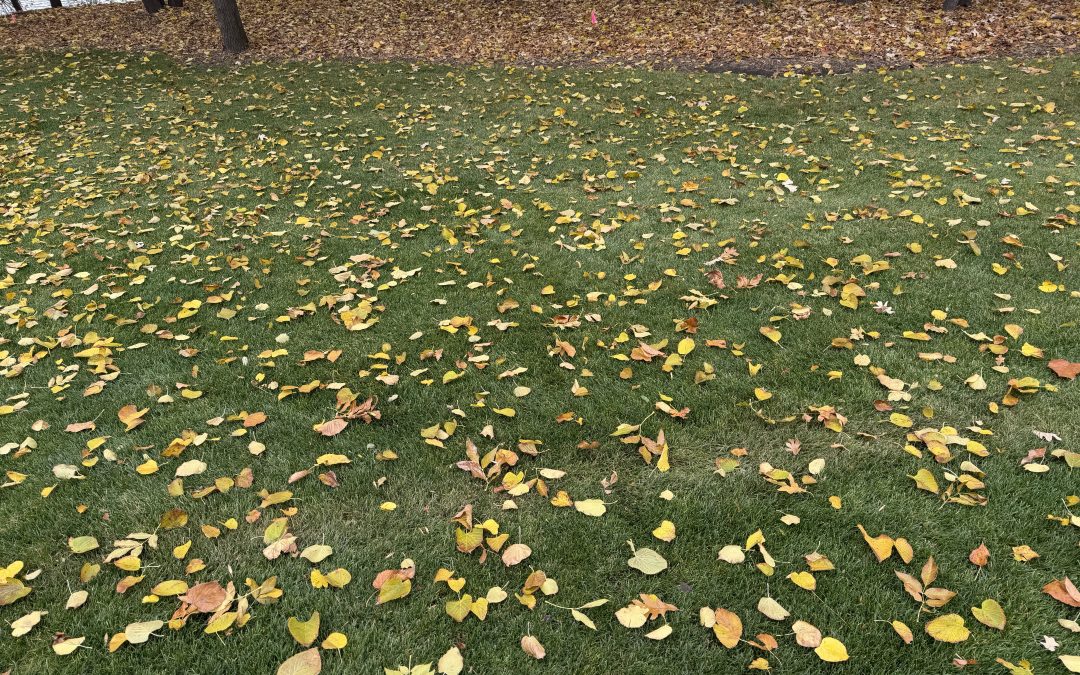
Should You Mulch or Remove Leaves From Your Lawn?
Every fall, homeowners across Minnesota and Wisconsin face the same question: Should I mulch the leaves into my lawn or rake them up and remove them?
The answer might surprise you. In most situations, mulching leaves into your lawn is actually better than removing them. Fallen leaves contain valuable nutrients and organic matter that can improve soil health and support a healthier lawn.
However, there is a point when too many leaves can do more harm than good. Understanding when to mulch and when to remove leaves can help you maintain a healthier lawn while reducing the time, effort, and environmental impact of your fall cleanup.
Why Mulching Leaves Is Good for Your Lawn
When trees grow throughout the season, they absorb nutrients and minerals from the soil to produce leaves. In the fall, those leaves drop to the ground, taking some of those nutrients with them. By mulching leaves back into your lawn, you help return these valuable resources to the soil rather than removing them from your property.
1. Mulched Leaves Return Nutrients to Your Soil
Leaves contain important nutrients, including nitrogen, phosphorus, potassium, and other minerals. When you mulch leaves with your lawn mower, they are chopped into smaller pieces that gradually decompose. As soil organisms break down the leaves, nutrients are released back into the soil, where they can become available to your grass.
Think of it as recycling nutrients that are already present in your yard.
While mulching leaves won’t completely replace the need for lawn fertilization, it can contribute to your lawn’s overall nutritional needs.
2. Mulching Feeds Beneficial Soil Biology
Healthy lawns start with healthy soil. Your soil contains an entire community of living organisms, including bacteria, fungi, and earthworms. These organisms play an important role in breaking down organic materials and cycling nutrients through the soil.
When you mulch leaves, you provide an additional food source for these organisms.
As the leaves decompose, they also contribute organic matter that can help improve soil structure, water infiltration, and moisture retention.
This is especially important for homeowners interested in environmentally responsible lawn care. Rather than continually removing organic materials, you are helping support the natural biological processes that maintain healthy soil.
3. Mulching Reduces Yard Waste and Transportation
When you rake, bag, and remove leaves, those leaves typically need to be transported to a composting or yard waste facility. That process requires additional labor, equipment, transportation, and energy.
Mulching leaves directly into the lawn eliminates much of that work.
Instead of collecting leaves, loading them into bags or trucks, and transporting them elsewhere, you can recycle those nutrients right where they originated.
It’s a simple way to reduce yard waste while improving your lawn at the same time.
When Should You Remove Leaves Instead?
While mulching should be your first choice, there is such a thing as too many leaves. When leaves accumulate into a thick blanket (such as the below photo), your lawn mower may struggle to chop them into pieces small enough to settle between the grass blades.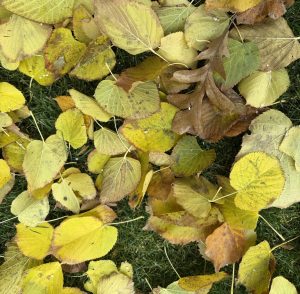
Instead, the shredded leaves can accumulate on top of the grass and form a dense layer. This creates several potential problems.
1. Thick Leaf Layers Can Smother Your Grass
Grass needs access to sunlight and air to remain healthy. When a thick layer of leaves covers the lawn, sunlight cannot reach the grass blades. This limits photosynthesis, the process grass uses to produce energy.
Dense, wet leaf layers can also trap moisture and restrict airflow around the grass. If this continues for an extended period, the grass can become weakened or even die.
2. Excessive Leaves Can Increase the Risk of Snow Mold
One of the biggest concerns for lawns in Minnesota and Wisconsin is snow mold. Snow mold is a fungal disease that can develop under prolonged snow cover, particularly when conditions remain cool and moist.
Thick layers of leaves can create favorable conditions for snow mold by trapping moisture and matting down the grass.
When the snow melts in spring, homeowners may notice patches of discolored, matted, or damaged turf. Removing excessive leaves before winter helps reduce these conditions and protect the lawn.
Mulching vs. Removing Leaves: Which Is Better?
Both approaches have a place in fall lawn care, but their benefits are different.
| Mulching Leaves | Removing Leaves | |
|---|---|---|
| Returns nutrients to lawn | Yes | No |
| Adds organic matter | Yes | No |
| Supports soil biology | Yes | No |
| Reduces transportation | Yes | No |
| Handles heavy leaf accumulation | Limited | Yes |
| Prevents excessive leaf cover | When properly managed | Yes |
The best approach is to mulch as many leaves as your lawn can reasonably handle and remove the excess when necessary.
How to Mulch Leaves Properly
The secret to successful leaf mulching is staying ahead of the leaves as they fall. Rather than waiting until every tree has dropped its leaves, continue mowing regularly throughout the fall.
Here are a few tips to make leaf mulching more effective.
- Mow frequently. During the heaviest leaf drop, your lawn may need to be mowed more often than the grass itself requires. Frequent mowing prevents leaves from accumulating into thick layers.
- Mulch when leaves are dry. Dry leaves are generally easier for a mower to chop into small pieces. Wet leaves tend to clump together and may be more difficult to mulch evenly.
- Make a second pass if necessary. If larger leaf pieces remain after mowing, going over the lawn a second time can help break them down further.
- Keep your mower blade sharp. A properly maintained mower will do a better job chopping leaves and cutting grass cleanly.
- Watch how much grass is visible. After mulching, you should still be able to see plenty of green grass through the shredded leaves. If the surface becomes covered in a thick layer of leaf material, it’s time to collect some.
Can You Leave Leaves on Your Lawn Over Winter?
One of the biggest mistakes homeowners make is allowing a thick blanket of whole leaves to remain on their lawn throughout winter. In Minnesota and Wisconsin, lawns can remain covered with snow for months. When large amounts of leaves are trapped underneath that snow, they can create conditions that increase the risk of winter lawn damage.
Thick leaf layers can smother grass, encourage matting, and contribute to conditions favorable for snow mold.
The goal should be to eliminate thick blankets of leaves before winter arrives. However, this doesn’t mean you need to remove every last leaf.
A small amount of scattered leaves or finely mulched leaf material (such as the below photo shows) is generally harmless and can continue breaking down into valuable organic matter.
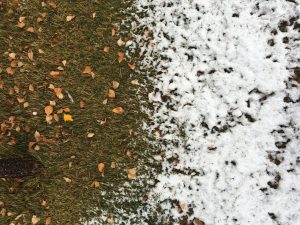
In fact, University of Wisconsin research has found that moderate amounts of shredded leaves can remain on lawns over winter without necessarily causing damage, while excessive accumulation increases the risk of problems.
So don’t worry about achieving a perfectly leaf free lawn. Focus on preventing excessive accumulation.
What Should You Do With Leaves You Remove?
If you have more leaves than your lawn can handle, those extra leaves can still be put to good use. Rather than treating them as waste, consider adding them to your compost pile or using them as mulch in landscape beds.
If you have more leaves than you can use, a local yard waste or compost facility is a good alternative.
The goal is to recycle as much of that organic material as possible, even when it cannot all remain on the lawn.
The bioLawn Recommendation: Mulch First, Remove When Necessary
At bioLawn, we believe healthy lawns start with healthy soil. Mulching fallen leaves is one of the easiest ways homeowners can support soil biology, recycle valuable nutrients, and reduce the environmental impact of lawn care.
Our recommendation is simple: Make mulching your first choice.
Continue mowing regularly as leaves fall, allowing your mower to chop them into small pieces that settle into the grass. If leaves accumulate faster than your mower can handle them, remove the excess rather than allowing a thick blanket to build up. Most importantly, don’t allow heavy leaf cover to remain on your lawn throughout winter.
By finding the right balance between mulching and leaf removal, you can spend less time cleaning up leaves and more time building a healthier, more sustainable lawn.
Looking for help growing a healthier lawn? At bioLawn, we specialize in environmentally responsible lawn care throughout the Twin Cities and western Wisconsin. Our lawn care programs are designed to improve plant health while supporting the soil biology that helps lawns thrive.
Learn more at getbiolawn.com